TENEBRAE
This ceremony of the Church is a mystery for many Catholics. The name means darkness and refers to the physical darkness in which in former times it used to be sung. It also symbolizes the powers of darkness pursuing Christ during His Passion.
In fact, it is the office of Matins and Lauds, which is sung during the Triduum, that is Maundy Thursday, Good Friday and Holy Saturday. Matin is the night prayer of the Church, prayed every day by priests and monks, and consisting in nine Psalms, readings and responsories. Lauds is the prayer of praise that greets the first light in the early morning, and consists in five Psalms, as well as a short chapter, hymn and a prayer. During the Holy Triduum these prayers are reduced to their bare bones, to express the sorrow of Christ during His Passion. However, the antiphons before the hymns are all special and the responsories are highly developed meditations on the Passion of Our Lord, sung in Gregorian Chant. The purpose behind these prayers is to relive the mystery of Christ’s Passion, showing our compassion, making reparation for the insults against His divine majesty and begging that we might live faithful to the mystery of the Cross.
Tenebrae of Holy Thursday focus on the agony of Our Divine Saviour in the garden of Gethsemane, on the betryal of Judas and the meekness of our divine Saviour before this betrayal, and on the wonderful institution of the Holy Eucharist, as Our Lord’s last will and testament.
Tenebrae of Good Friday draws us to the climax of the mystery of Calvary, the hours on the Cross, the abandonment of our Divine Saviour, the anguish in bearing the sins of the world, linked to the hope of the Resurrection.
Tenebrae of Holy Saturday express the peace of the day of rest, after the accomplishment of the work of our Redemption. With great regret do we think of the sufferings already accomplished, but our hope in the resurrection holds us firm as we await the night of His complete victory over sin and death.
Here are some unusual characteristics of the Tenebrae. The prophet Jeremias wrote the book of the Lamentations to pour out his grief over the destruction of Jerusalem and the exile of the Jews into Babylon, punishment for their sins. The Church sees this as a type of the crucifixion, brought about by the Jews themselves, unfaithful to their own Messiah, and laments the sins that have crucified Christ, symbolized by the temple of Jerusalem, and prays “Jerusalem, Jerusalem, be converted to the Lord your God”.
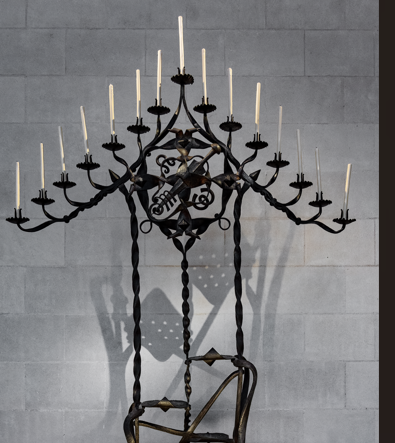
Another is the candlestick with fifteen candles which is centrally placed in the sanctuary. Originally it was to give light and after each of the 14 Psalms one candle is extinguished, symbolized how the disciples fled during the Passion. One candle remains, which symbolizes Our Lord. At the end of the ceremony this candle is removed and hidden behind the altar, until the earthquake that took place at Our Lord’s death is symbolized by the beating of the books. It then reappears, to show our hope in the Resurrection.
The ceremony finishes with a beautiful antiphon “Christ became obedient for us unto death, even to death on the cross”, followed by a prayer that He might look down favourably on His family, the Church. One cannot but be greatly moved by the Tenebrae.
SHARE
COMMENTS (0)