On the Effect of Music on the Civilization of Society
Music is not neutral. It enters the soul before reason has fully matured, shaping the affections by which man later judges, chooses, and acts. What people listen to in their leisure becomes, over time, what they live out in their habits. Thus, music is not merely a reflection of civilization, but one of its most powerful architects.
Plato, in The Republic, teaches that rhythm and harmony penetrate deeply into the inner life of man, forming the character long before explicit reasoning takes hold. He warns that when musical forms are altered toward disorder, softness, or excess, the souls of citizens are gradually reshaped in the same direction. For him, the decline of music is not a trivial matter of taste but the beginning of political and moral decay. When the ear is trained to love what is disordered, the soul itself becomes disordered.
This insight is further clarified by Aristotle, whom we properly call the philosopher Aristotle. In his Politics, he explains that music imitates the passions and therefore trains them through repetition. Since virtue consists in the right ordering of the passions under reason, music becomes an instrument of moral education. The melodies and rhythms a man habitually receives shape his inclinations, either disposing him toward moderation and harmony or inclining him toward imbalance and excess. Thus, music forms not only taste, but character.
Socrates, as presented in the Platonic dialogues, insists that education must begin with the proper formation of the soul through music and rhythm. Before a man can think rightly, he must be accustomed to feeling rightly. If the passions are malformed, reason itself becomes unstable, for it is forced to operate upon a disordered foundation. In this way, the corruption of music leads indirectly to the corruption of judgment.
The Catholic tradition receives these philosophical truths and elevates them within the order of grace. St. Thomas Aquinas speaks with precision in the Summa Theologiae. In treating the use of song in divine worship, he affirms its spiritual power; “The use of song in the praise of God is a salutary institution, that the souls of the faint-hearted may be the more incited to devotion.” (ST II-II, q.91, a.2)
Here, music is understood as an aid to the soul's ascent toward God, strengthening devotion and drawing the affections into harmony with divine truth. Yet St. Thomas Aquinas is equally clear that music, like all sensible pleasure, must remain governed by reason and ordered toward a proper end; “If a man uses these things in moderation, and for a fitting end, they are virtuous; but if he exceeds in them, they become sinful.” (ST II-II, q.168, a.1). Thus, music stands at a crossroads. It can elevate the soul toward God or disperse it into distraction and disorder, depending on its form and use.
Sacred Scripture confirms this dual power. In the Psalms, music is directed entirely toward divine praise: “Praise Him with trumpet sound; praise Him with lute and harp” (Psalm 150). Here, music lifts the soul upward, aligning it with the glory of God. Likewise, when David plays before Saul, the troubled spirit departs, and peace is restored (1 Samuel 16:23), showing that rightly ordered music can heal the interior life. Yet Scripture also reveals the opposite. At the foot of the golden calf, the people give themselves over to disorder, accompanied by sound and revelry (Exodus 32). The music does not stand apart from the sin; it participates in it, expressing and intensifying the interior corruption of the people.
Among the saints, this truth is received with both gratitude and caution. Augustine of Hippo confesses his own experience of music’s power: “I am inclined… to approve of the usage of singing in the Church, that so by the delight of the ears the weaker minds may be roused to devotion.” (Confessions, Book X)
Yet he also fears the danger that the sweetness of sound might overshadow the truth it is meant to convey. Music must serve truth, not replace it. Likewise, Basil the Great teaches: “The Holy Spirit mingled the sweetness of melody with doctrine, that by the pleasantness of the sound we might receive what is useful in the words.” For St. Basil the Great, "music is not an end in itself, but a vessel through which truth is more deeply received by the soul."
At this point, a necessary question arises. If music shapes the soul so profoundly, then by what standard can it be judged? What distinguishes good music from bad, and how ought a Christian form his listening? The answer does not lie in mere preference, but in objective criteria rooted in reason and faith. Music is good when it is ordered toward truth, proportion, and the good of the soul. It is bad when it disorders the passions, obscures reason, or inclines the will toward vice.
First, the content of music must be considered. Lyrics that glorify vice, impurity, pride, violence, or disorder cannot be reconciled with a rightly ordered soul. Even when clothed in pleasing sound, such content works internally to normalize what ought to be resisted. As Scripture teaches, “Bad company corrupts good morals” (1 Corinthians 15:33), and what enters through the ear becomes a kind of invisible company within the soul.
Second, the form of music itself must be examined. The philosopher Aristotle teaches that music imitates emotional states; therefore, music that is chaotic, excessively aggressive, or sensual in its structure can agitate the passions even apart from words. By contrast, music marked by proportion, clarity, and restraint disposes the soul toward harmony. The question is not whether the music is complex or simple, but whether it reflects order or disorder.
Third, the effect of music on the listener must be judged. St. Thomas Aquinas insists that sensible pleasures are good only when they remain subject to reason and directed toward a fitting end. If a piece of music leaves the soul restless, agitated, inclined toward impurity, or distracted from higher things, it fails this test. If it fosters peace, clarity, and a readiness for what is good, it fulfills its proper role.
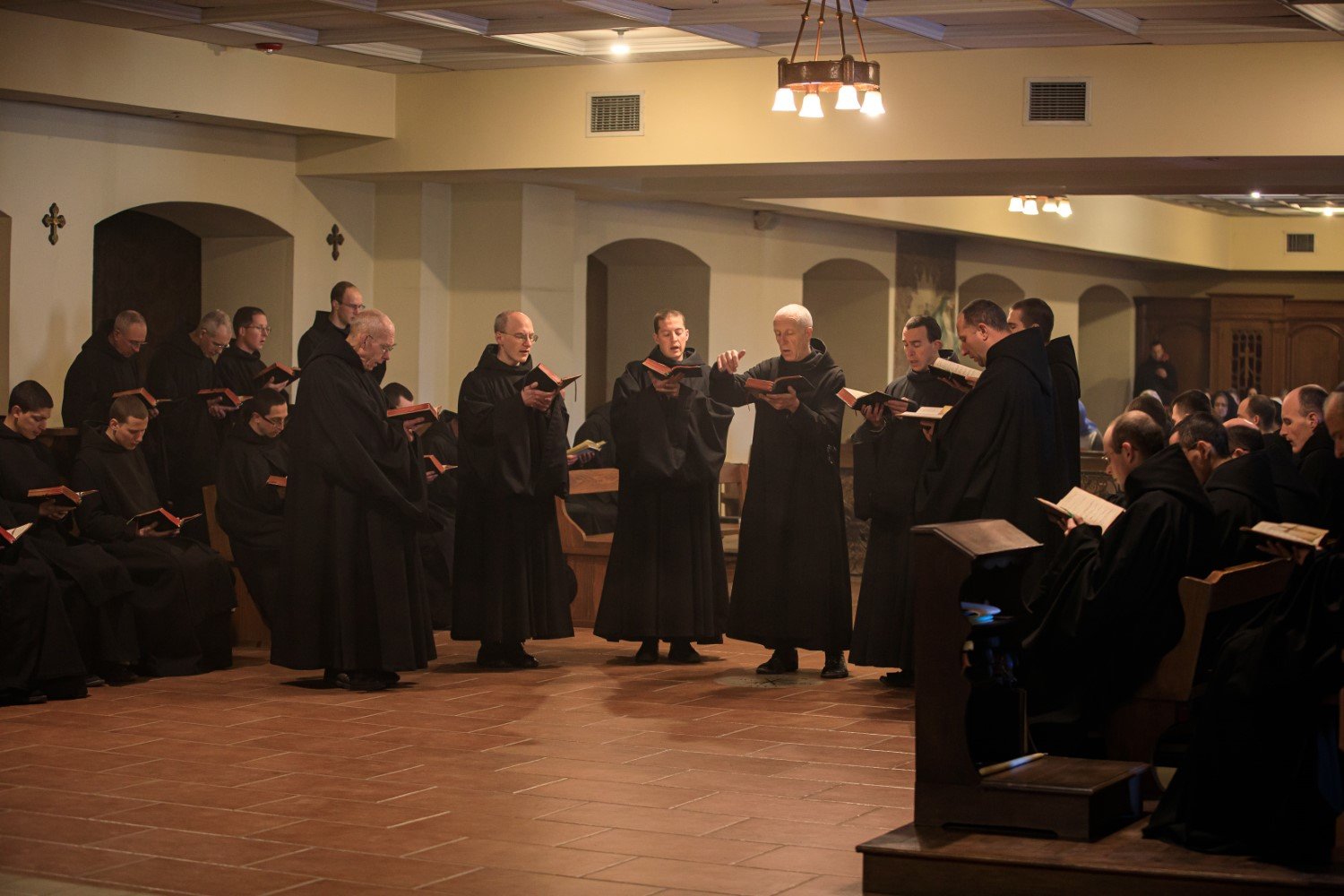
From this, it becomes clear that not all good music must be explicitly religious. Gregorian chant stands as the highest model within the Church because it perfectly unites simplicity, order, and divine orientation. It removes excess, disciplines the senses, and directs the soul toward contemplation. Yet the principles embodied in Gregorian chant can be present, in varying degrees, in other forms of music as well. A piece need not be liturgical to be good, but it must not contradict the order that liturgical music perfectly expresses.
Therefore, it is not required that every Catholic listen only to Gregorian chant, but it is required that every Catholic form his conscience in such a way that he can judge music according to truth. Music outside the sacred tradition may be received if it respects order, avoids moral corruption, and does not inflame disordered passions. The standard is not genre, but conformity to the good of the soul. This places a responsibility upon the listener. The question is no longer, “Do I enjoy this music?” but rather, “What is this music doing to my soul?” For what one repeatedly delights in, one gradually becomes.
If music truly shapes the inner life, and the inner life shapes the world, then the condition of a civilization can be quietly read in the music it loves. What fills the ears of a people eventually settles into their hearts, and what settles in the heart begins to appear in their actions, their values, and their way of life. The sounds of an age are never accidental; they are signs of what that age desires, tolerates, and ultimately becomes.
But now that this has been seen clearly, it cannot be unseen. What was once received without reflection can no longer be received in the same way. To understand that music can elevate or corrupt the soul is to lose the shelter of ignorance. The moment truth is known, responsibility follows. What may once have been done without full awareness now stands under judgment, not from others, but from one’s own conscience.
This does not demand harshness, but it does demand sincerity. Each person must now ask, not only what is pleasing, but what is forming within. Does this music lead the soul toward order, peace, and truth, or does it quietly incline it toward restlessness, confusion, and disorder?
The question is no longer theoretical. It is personal, and it is immediate.
And if the music of our time were placed beside the state of our world, if one were to listen carefully to what is celebrated, repeated, and loved, would it still be possible to deny that the two are deeply connected, or would the resemblance begin to speak for itself?
SHARE
COMMENTS (0)